This article argues that talent is overrated, excellence can be achieved by anyone, it is a matter of mindful practice, preferably with an experienced coach or teacher. I disagree. I think endogenous talent is extremely relevant as well as is inherited behavioural attitudes, intelligence, and physique. Nonetheless, an excellent read.
Traditional NH (Quebecois) Recipes
From the December 2018 issue of NH Magazine.
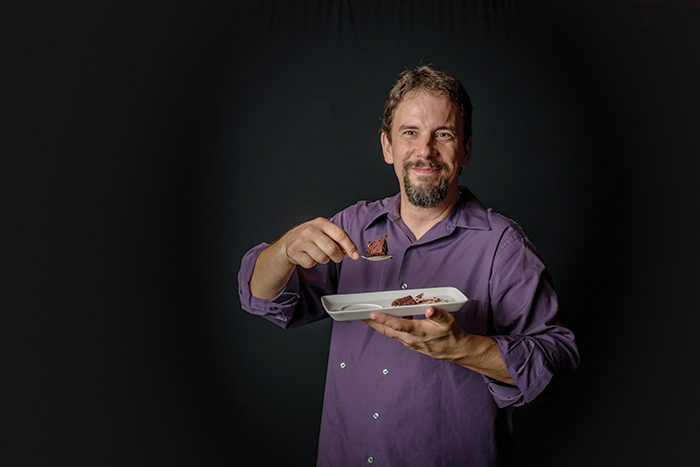
Living on Manchester’s West Side during my childhood, we lived fairly frugal, blue-collar lives. For my millworker parents, penny-pinching wasn’t just a fad, it was a necessity. To make matters even more challenging, in the late ’80s, stable piecework jobs faded away and forced our folks, and many others in our neighborhood, to reinvent themselves. Some went back to college, some started their own businesses, some stayed home and raised a family. It was a tough yet exciting time. Throughout it all the comfort foods of our era stayed constant. Cheap ground meats, filling potatoes, golden brown crusts and boiled things — all of these were at the center of our tables.
With five mouths to feed, it could have been easy to feel hungry or that we were “doing without.” Looking back, however, nothing could have been further from the truth. Whether it be space, activities or food, my parents were experts at making a lot out of a little. My mother, though, was the queen of stretching a dollar. The number of meals she could pull off with just one roasted chicken was the envy of our tenement.
Classic New Hampshire fare was probably never famous for being delicious, sought-after cuisine, but the flavors and sheer act of creation were tied to more than seasoning; there were emotions and memories bound to these foods. Sadly, I’m noticing that this type of low-cost, hearty and nutriment-filled cooking is slowly leaving our dinner tables. The sustenance of my youth, the foods that defined our region and nurtured our souls, is seemingly being replaced by prepared foods sold by the pound.
In a time of smartphones, constant connectivity and instant gratification, bringing back classic dishes enjoyed over generations can not only bring families together, but can perhaps also fix a few of the ailments that plague our country at large. Food brings people together, and it always has. Having eaten many different comfort foods in various contrasting cultural settings, I have yet to witness disaffection while sitting together, mouths full, around anyone’s table. Eating a meal together is a spiritual experience that fills more than our stomachs.
New Hampshire cuisine is the result of frugality and the melding of cultures. We can see it everywhere if we look in the right places — French Canadians, Irish, Portuguese, Italians, Greeks and more — all settled here to make a living and their culinary influence came with them.
In my family, wafts of beef stew, pot roast or my grandmother’s famous pork chop casserole warmed our spirits, especially in the cold winter months. My personal favorites were generally bubbling crocks laden with cheese and butter-cracker-crusts or staples like porcupine meatballs, orbs of beef laden with rice, simmered in a condensed tomato soup “sauce,” and American chop suey, a regional “goulash” overflowing with ground beef, elbow noodles, green peppers, onions and tomato sauce. It’s no wonder I gravitated toward making food for a living.
There was tourtière, a hefty pork pie, and poutine, hand-cut French fries sprinkled with squeaky cheese curds, both smothered with unctuous beef gravy. And how could I forget the staple of boiled dinner, corned beef, potatoes, carrots, turnips and pickled beets. My mom’s spin usually included cheap lobs of kielbasa that would end up a cold snack for the next day’s school lunches.
I fear that an amazing generation of traditional New England foods — big-flavored, inexpensive and uninhibited — are becoming, like the textiles fabricated at the old mills of Manchester, a distant memory.
Baked beans and brown bread or Chinese pie mustn’t go by the wayside. As a chef and aging member of “Generation X,” it is my obligation and duty to carry the torch for those in front of us. It’s time to revisit old favorites or, perhaps, discover some new ones.
I’ve recently had a chance to thumb through a few of my great-grandmother’s old handwritten recipes. The list of favorites is lengthy and inspiring. Yes, there were those classics that she was known for; cat-head biscuits, macaroni and cheese casserole, beef stew and pot roast, just to name a few. The ones that caught my eye, however, were her desserts. Unapologetically fattening, riddled with cholesterol and trans fats, but oh so amazing. As children, we would sit around Gram Carrie’s orange Formica kitchen table eating her shiny, hot-from-the-lard buttermilk donuts tossed lovingly in cinnamon sugar. Those long-forgotten moments came rushing back to me as I read through these perfectly kept pieces of paper, index cards or cutouts from the long-lost magazines of her time. This recipe box was a sort of T.A.R.D.I.S. that transported me back to a time where things were simpler and not yet hazed by clouds, texts or cat videos.
All these amazing morsels were more than just about the sugar, recipe boxes or frying kettles, they were about bonding, growing up and loving each other.
Perhaps our general sense of division in New Hampshire, or anywhere in the country for that matter, could be healed just by taking time on a regular basis to pull down an old cookbook on a rainy day or share a casserole together a few nights a week at the dinner table. The dinner table itself may be among the lost; either turned into a place to stash the piles of mail or sit listlessly staring at our smartwatches. Counting steps may become more important than counting the minutes until dinnertime. These recipes connect us to our past and could heal our present whilst setting us up for a very different future.
In New Hampshire, reestablishing the lost act of eating together, especially those cultural classics, every night could start a positive revolution. Grab a cookbook, call your grandmother or visit the library and make some memories together. I have included four savory dishes that were an important part of my family upbringing, as well as one dessert. These meals are the center of some of New Hampshire’s most cherished comfort foods. I hope you enjoy them.
Porcupine Meatballs
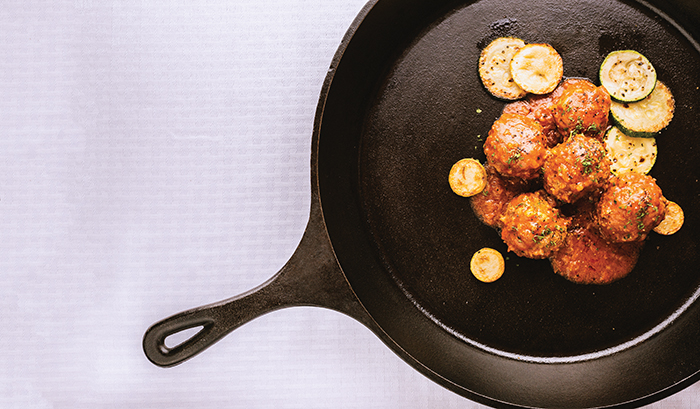
Porcupine meatballs are not only great as a nice, hearty dinner, but they make great leftovers. We make club sandwiches with them the next day.
Ingredients
1 pound ground beef
¼ cup uncooked long-grain rice
1 slightly beaten egg
1 tablespoon dried parsley flakes
¼ cup onion, finely chopped
½ teaspoon garlic powder
¼ teaspoon paprika
⅛ teaspoon ground black pepper
½ teaspoon kosher salt
1 10.75-ounce can condensed tomato soup, divided
½ cup water
2 teaspoons Worcestershire sauce
Instructions
In a medium-size bowl, combine meat, rice, egg, parsley, onion, garlic powder, paprika, pepper, salt and ¼ cup tomato soup. Mix thoroughly and shape into about 20 meatballs and place in a skillet.
Mix remaining soup, water and Worcestershire sauce. Pour over meatballs. Bring to a boil and reduce heat. Cover and simmer for about 25-30 minutes, stirring often.
Rice should be cooked and sticking out of the sides of the meatballs.
American Chop Suey With Hamburg
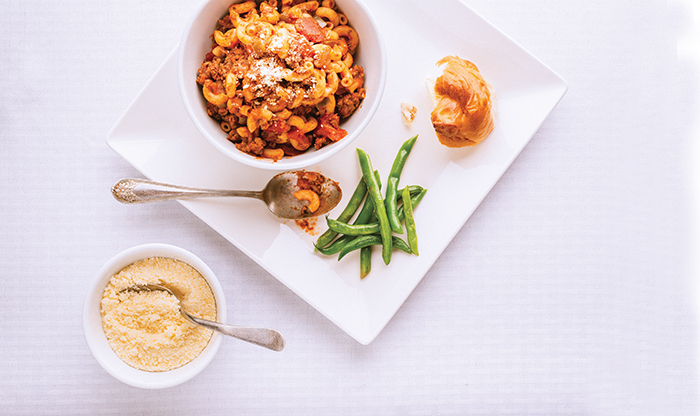
Similar to American goulash, this regional fare has been a staple throughout the working class and can still be found on menus of area diners.
Ingredients
3 tablespoons butter
1 medium yellow onion, chopped
1 green bell pepper, stemmed, seeded and chopped
2 garlic cloves, minced
1 pound ground beef
1 teaspoon dried oregano
1 teaspoon dried basil
1/2 teaspoon ground black pepper Kosher salt to taste
1 14.5-ounce can diced tomatoes
1 14.5-ounce can tomato sauce
1/4 cup tomato paste
2/3 cup tomato juice
Pinch of sugar
1 pound elbow macaroni
Instructions
Heat the butter in a large pot over medium heat. Add the onion and bell pepper and cook, stirring occasionally, until soft, about 5 minutes. Add the garlic and cook, stirring, for about 1 minute. Then add the ground beef and continue to cook, stirring and breaking up the chunks of meat with a spoon. Cook until the meat is no longer pink, about 7 minutes. Drain off most of the fat. Sprinkle the herbs and pepper over the meat, add salt to taste and mix in well.
Add the canned tomatoes with their juices, the tomato sauce, paste and juice. Add sugar to taste. Simmer while you cook the pasta.
Bring a large pot of salted water to a boil over high heat. Add the macaroni and cook, stirring occasionally, until al dente. Drain. Mix the macaroni into the chop suey. Serve hot.
Simple Beef Gravy
This simple gravy can be thrown together in about 10 minutes. Not only was this a staple in our house to pour over pork pie, this gravy is also a great go-to for mashed potatoes or pot roast.
Ingredients
2 cups low-sodium, good-quality beef broth
2 teaspoons garlic powder
1 teaspoon onion powder
1 tablespoon Worcestershire sauce
1/4 cup cold water plus 3 tablespoons cornstarch
Salt and pepper to taste
Splash of heavy cream (optional)
Instructions
In a medium saucepan, bring beef broth to boil over medium-high heat.
Stir in garlic powder, onion powder and Worcestershire sauce.
In a small bowl, whisk together cold water and cornstarch until
dissolved. Pour into boiling beef broth and reduce heat to medium-low.
Stir until thickened.
Season with salt and pepper. Adjust seasoning according to preference.
Add optional heavy cream for creamier gravy. Serve hot over pork pie.
Recipe Notes
This recipe makes about 2 cups of gravy and can easily be doubled or even tripled if you use a large saucepan.
Pork Pie With Gravy
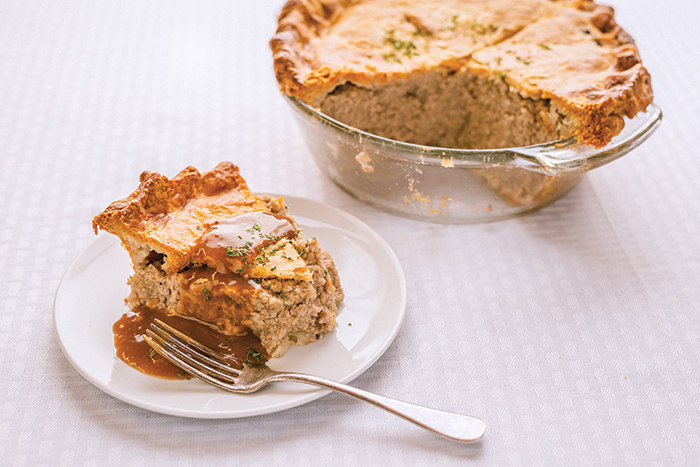
Thought to have originated by French Canadian millworkers in the 19th century, this New Hampshire version of tourtière was originally served to help celebrate the New Year. This recipe is my favorite.
Ingredients
2 pounds ground pork
1 medium onion, finely chopped
1 teaspoon salt
2 cups water
1 teaspoon cinnamon
1 teaspoon ground nutmeg
2 cups mashed potatoes
Double pie crust
1 tablespoon milk
Instructions
In a medium saucepan over medium-low heat, combine pork, onion, salt and water. Simmer gently, stirring often, until all liquid evaporates, about an hour. Stir in spices. Add potatoes and mix well to combine thoroughly. Heat oven to 375F. Line a pie plate with one crust. Spoon in pork/potato mixture. Add top crust and flute the edges. Brush the top with milk and slice four, 1-inch slits into the top to allow steam to escape. Bake 30 minutes or until golden brown and internal temperature is at least 145F. Meanwhile, make beef gravy (recipe above).
Double Batch Pie Crust
Ingredients
4 cups flour, plus extra for work surface
2 teaspoons salt
1 cup lard
3/4 cup shortening
1 large egg, lightly beaten
1 tablespoon vinegar
1/2 cup ice water
Instructions
In a large bowl, combine flour and salt. Cut lard and shortening in until pieces are about the size of a pea. Add egg, vinegar and ice water. Work mixture into a soft, cohesive dough ball. Divide in half, and put one half aside for another pie (or freeze). Cut other dough mass in half. Wrap in plastic and place in refrigerator for at least 30 minutes. On a work surface dusted with flour, roll out bottom and top crusts. Yield: 2 two-crust pies
Recipe Notes
This recipe can be used to fill a very deep pie pan for a holiday centerpiece (pictured) or can make two pies where one can be frozen for later. In my family, we would usually bake one for Christmas and save the second one for Easter, but this dish can be eaten any time of the year. Regarding the crust — the addition of vinegar and egg will make the crust a bit flakier as well as alleviate the chances of getting a tough crust.
Chinese Pie or Yankee Shepherd’s Pie
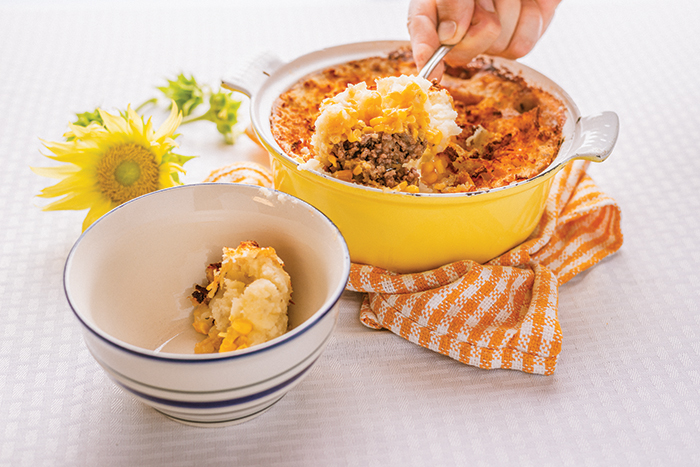
This dish is called “Chinese Pie” or “Pâté Chinois.” Thought to have been created by Canadian immigrants working on the railroad in China, Maine. There’s no doubt that this is a huge part of our New Hampshire history. It’s even better the next day.
Ingredients
1 tablespoon olive oil
1 pound ground beef
1 medium onion, chopped
Salt and pepper to taste
1 14-ounce can creamed corn
3 cups mashed potatoes (made ahead to your liking)
Paprika for dusting
Instructions
Preheat oven to 350F.
Heat oil in a large skillet on medium-high heat.
Add onion and cook 3-4 minutes, add ground beef, salt and pepper and cook until brown and breaking up any large chunks with a spoon.
Drain off most of the fat.
Place into a casserole dish making a nice layer.
Layer the creamed corn on top.
Spread the mashed potatoes on top being sure to completely cover the corn layer.
Sprinkle a thin dusting of paprika on top of the potatoes.
Bake for 35 minutes or until golden brown. The corn layer should bubble slightly around the edges of the potatoes.
Serve with a garden salad and buttery rolls.
Mayonnaise Cake
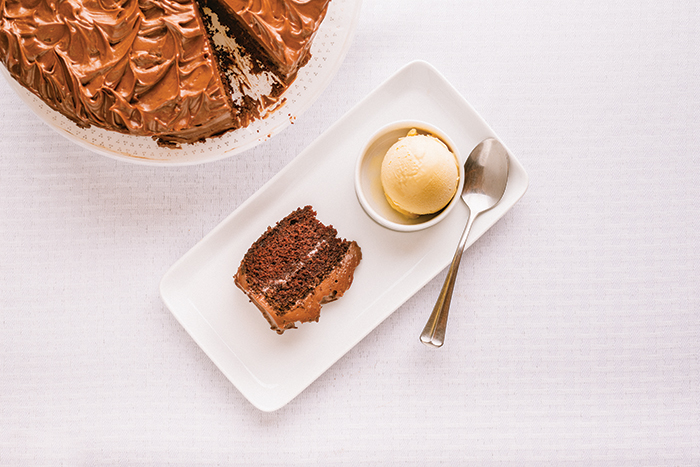
As with many of our states classic foods, this cake was born of a time where eggs and oil were scarce.
Ingredients
2 cups flour
1 teaspoon baking soda
1 teaspoon baking powder
½ teaspoon salt
¼ cup cocoa powder
¾ cup mayonnaise
1 cup sugar
1 cup water
1 teaspoon vanilla extract
Instructions
Sift together all dry ingredients and set aside.
Cream together mayonnaise and sugar.
Alternatively add dry ingredients and water until blended together.
Stir in vanilla extract and stir until everything is combined and smooth.
Spray a 9-inch round cake pan with non-stick spray.
Bake in 350F oven for about 35 minutes or until a toothpick inserted in the middle comes out clean.
Cool for 10 minutes in cake pan and carefully remove from cake pan and cool completely on a cake rack.
Ice with chocolate buttercream icing.
Simple Buttercream Icing
Ingredients
6 tablespoons unsalted butter, softened
2 1/3 cups confectioners sugar
3/4 cup unsweetened cocoa powder
1/3 cup whole milk
2 teaspoons vanilla extract
1/4 teaspoon salt
Instructions
In the bowl of a stand mixer fitted with the paddle attachment, beat the butter on medium speed until it is smooth, about 1 minute.
Add the confectioners sugar and cocoa powder to the bowl and beat until combined.
With the stand mixer running on low speed, slowly stream in the milk and vanilla extract then add the salt and continue beating until well-combined, scraping down the sides as needed, about 2 minutes.
Increase the speed to high and beat the frosting for an additional 2 minutes.
Use the frosting immediately. Can also be stored in an airtight container in the refrigerator. (If you refrigerate the frosting, you may want to re-blend it for a few seconds in the stand mixer before using it.)
Behavior modification by parasites
Tapeworm-cancer-AIDS is a real thing
They found that people given a flu vaccine interacted with significantly more people, and in significantly larger groups, in the 48 hours after being exposed, compared with the 48 hours before. The infected hosts were more likely to head out to bars and parties.


Andaman
The Andaman Islanders are getting a lot of unwanted exposure after the recent killing of a missionary. In the video below I was surprised to learn that natives are aware they are in paradise, and actively avoid contact with foreigners:
Here is an interesting Twitter thread on the shenanigans of Maurice Vidal Portman
On the Patriarchy in native societies, some realtalk by Donald Tauzin:
By their very nature, it is said, women are the source of nearly all discord and litigation within the community. Through their ceaseless enticements to adultery, their notorious insensitivity to the sensible commands of father, husband, and brother, and their mindless passion for gossip and intrigue—in these and countless other ways women are the bane of a peaceful society.
Giacomo Leopardi
“…Trained all his life to pursue knowledge, Leopardi’s simple intuition was that, once found, knowledge did not help you to live. On the contrary, it brought despair. And once learned, it could not be unlearned…”
“…one can measure the extent of a society’s civilisation by the diversity of opinion it is willing to countenance…”
Communication, collaboration, colocalization
The recent decision by Amazon to locate in NYC and near DC reminds me of the “communication, collaboration, colocalization” propaganda shoved down my throat when my company BigPfarma moved to Kendall Square. “We will be near our MIT collaborators”, “Serendipity will enrich our research”, “the restaurants are great” (I kid you not - spoken by the director of research). For most of us, one way commutes increased from ~15 minutes to over an hour. That is two hours a day of commuting. Two hours not spent maintaining our property, enjoying our families, volunteering in the community. Multiply that by thousands. A huge cost extracted from the workers and, assuming there is some value added to the colocalization, transferred to the elites.
I cannot recall where I read that the overarching goal of moving to Kendall Square is to outsource the vetting of your employees to MIT. If you run a technology company, the most valuable employee is an MIT graduate. MIT, due to its reputation as the top technology school in the world, has its choice of the most intelligent, ambitious, and innovative students from around the world. If you hire an MIT graduate, not only do you get an extremely motivated and intelligent individual, but most likely that individual is young, unmarried, childless, does not own property, etc. essentially no other reponsibilities. That graduate will work 60 hours a week for their 40 hour salary. If all your employess were MIT graduates, you would have a great competitive advantage. If all other technology companies are moving to Kendall Square to hoover up the MIT graduates, you better move there also.
You can’t advertise for young, unmarried, childless MIT graduates but you can do the next best thing - move into their backyard such that you become an attractive employer. Furthermore you discourage parents of children from applying for your positions. Parents don’t want to live in Kendall Square where you never know what you might find on your street in the morning. Parents want to live in the suburbs where the schools are good, yards are large, and diversity is limitted.
So now we see Amazon utilizing a similar approach. They don’t want parents who might have to stay home to tend a sick child, or leave early for a ballet recital. They want careerists who will go the extra mile, step out of their comfort zone, show initiative, etc. etc. further amplifying the differences between the haves and the have nots.
Michael Seibel of Y Combinator knows the value of young people:
“Your 20s (are) your best chance of starting a company early, you wake up one day and you’re out of the game. Big companies know how disruptors get started. They take talented people, lock them down with stock options, and put them in the corner somewhere.” He continued, “What’s tricky about being a young founder enticed by big company jobs is that it’s at the time of your life when you have the fewest obligations. You can get a big company job at any point in your 20s but only at the beginning and middle of your 20s do you not have the mortgage and the family.” Seibel added, “It’s a massively underused period of time.”
America’s worst place to live … families are distractions…
You don’t have to be curing cancer
The Effect of High-Tech Clusters on the Productivity of Top Inventors
90 percent of growth in high-tech jobs happened in just 5 metro areas
Biotech living and walking dead
Cities aren’t the innovative incubators they used to be
Agglomeration is good for research scientists, even taking costs into account.
Superstars or Black Holes: Are Tech Clusters Causing Stagnation?